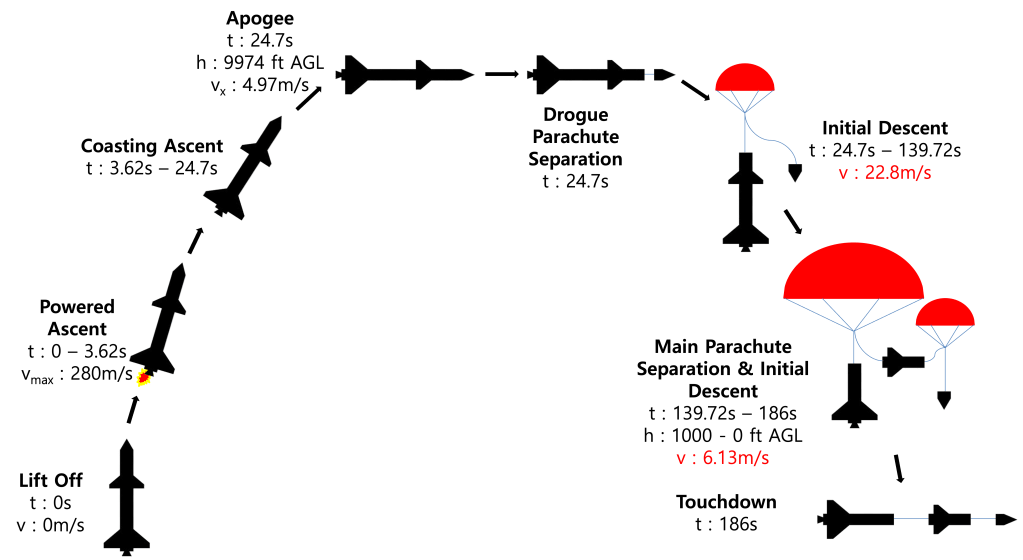
In our recovery system, the drogue parachute is deployed at apogee. The secondary charge is activated 1 second after apogee. The main parachute is deployed at an altitude of 1,000 feet, and its secondary charge is also triggered 1 second after reaching that altitude. The parachute diameters are 2.3 feet for the drogue and 7.22 feet for the main parachute. The descent speed after drogue deployment is approximately 74.8 ft/s, and it reduces to 20.1 ft/s after full deployment of the main parachute. These values are based on simulations conducted using OpenRocket.

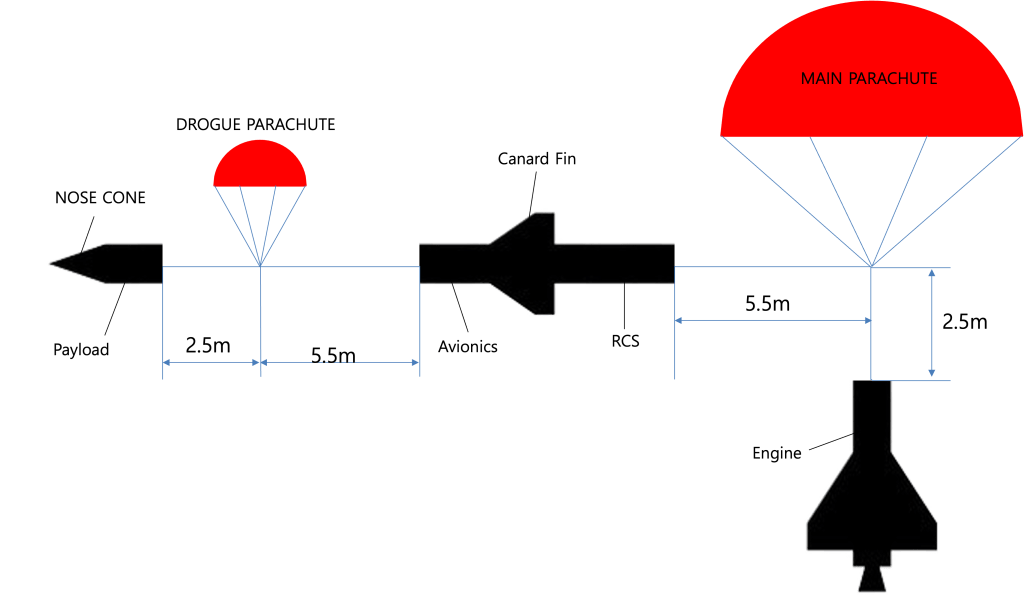
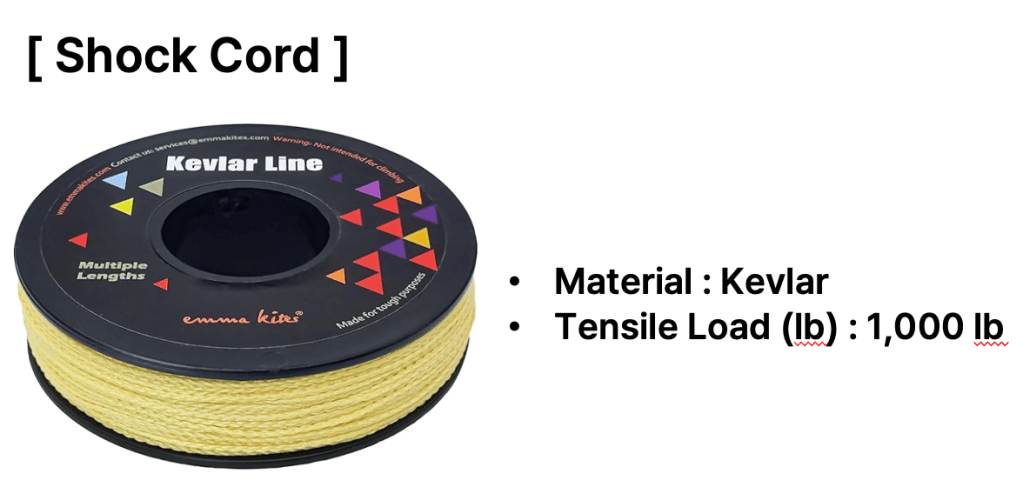
The shock cords for both the drogue and main systems are 26.25 feet long and made of Kevlar with a tensile strength of 1,000 pounds. As shown in the recovery harness diagram, the drogue parachute is positioned 2.5 meters from the nose cone and 5.5 meters from the body tube. Similarly, the main parachute is positioned 2.5 meters from the engine and 5.5 meters from the body. This arrangement is intended to prevent collisions between separated airframe sections during descent.
For fire protection, we use a 6.5 x 6.5 inch fire blanket for the drogue and a 9 x 9 inch fire blanket for the main parachute.
The ejection charges consist of 1 gram each for the drogue main and secondary, and 2.5 grams each for the main parachute’s main and secondary charges. These values were determined based on theoretical calculations with safety factors applied and were validated through successful ground tests. We will continue testing the main charge to ensure reliable deployment of the main parachute.
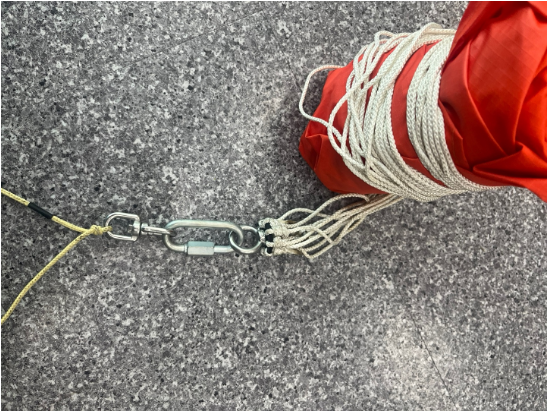
As shown in the attached photo, we connected the components using a swivel link, quick link, and eyebolt. This configuration prevents line twisting and improves the reliability of load transmission.

 HANul
HANul 
댓글 남기기