[작성자:] Hanul CU
-
Simulation / Analysis
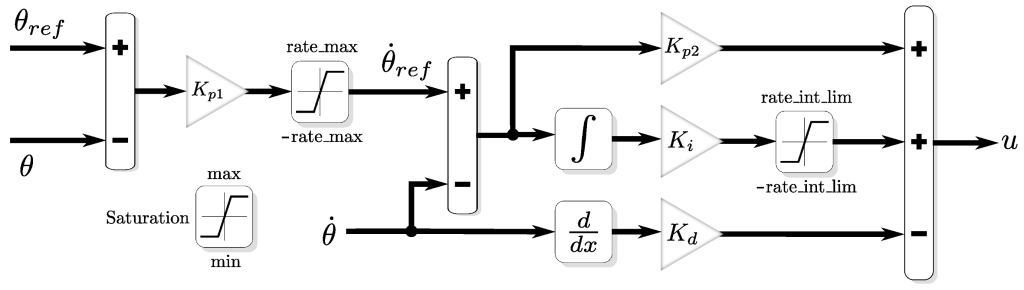
1. Rocket dynamics_1 by Controla – (Guidance, Navigation and Control LAB) 2. TVC Rocket dynamics_2 by Controla – (Guidance, Navigation and Control LAB) 3. Matlab simulation Plot – TVC Rocket (RK4) 4. 2025 IREC-HANul Core idea diagram 5. OpenRocket simulation results 6. Rocket Simulation Tutorial
-

Propulsion
We selected this motor to complete our mission and reach an altitude of over 10,000fts. Initially, I planned to use an M1845NT Motor, but after simulating it in OpenRocket with the expected weight, it didn’t reach the target altitude. Therefore, I decided to use this motor with a higher average thrust. Area specific Propulsion Type
-
Development of Flat Air Bearing System for Satellite Cold Gas RCS Controller Testing
Designed and developed a Flat Air Bearing system for testing satellite Reaction Control System (RCS) controllers. The system provided a frictionless testing environment that simulated space conditions for accurate verification of cold gas thruster control systems. Successfully implemented attitude control algorithms and validated their performance through extensive testing on the air bearing platform.
-
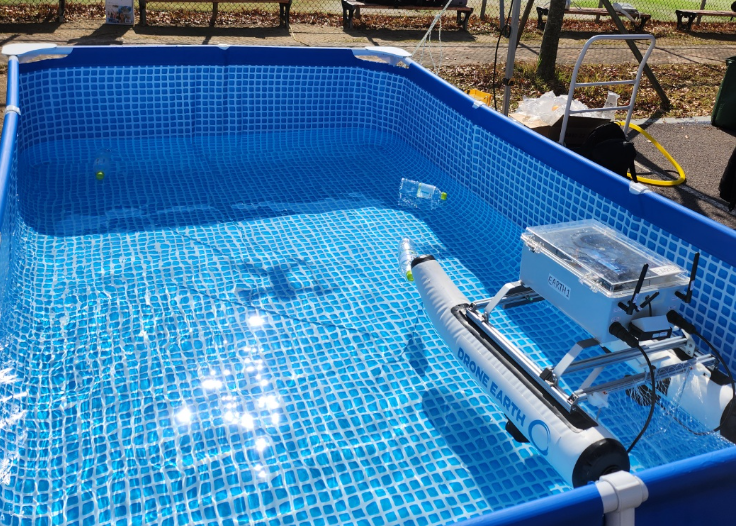
Development Experience in Marine Debris Cleaning System using UAV-AI-USV Integration
Developed an integrated system combining UAVs (Multicopters), USVs (Catamaran), and AI technology for marine debris cleanup operations. The system utilized AI-powered image processing for debris detection and classification through UAV surveillance. Designed and implemented an autonomous catamaran USV system capable of navigating to identified debris locations and performing collection operations. The project demonstrated successful integration
-
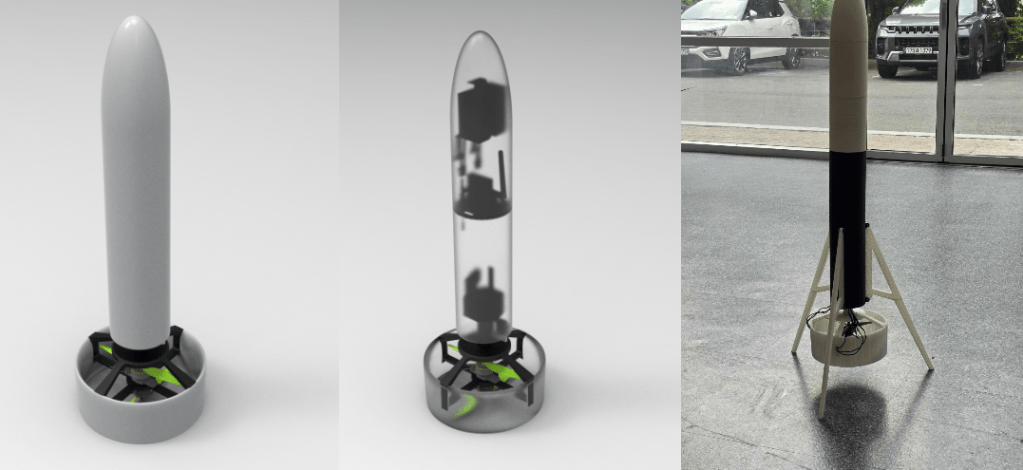
Project experience in rocket landing using Thrust Vector Control(Project ODMSBR)
Developed a landing control algorithm for reusable rocket systems. Designed and implemented an attitude control system using thrust vector control, and optimized control logic for various landing scenarios. Verified the control system performance through groundtesting and implemented a real-time feedback control system to enable stable landing.
-
Introduction to Aerospace Engineering and Rocket Engineering for High School Students (2024)
Lecture on the introduction of Aerospace Engineering and Rocket Engineering to high school students.
-
Oral Presentation at the 2023 Korean Society of Propulsion Engineering (KSPE) Student Session on “Development of HAN-based Single Thrust Engine, Ground Hot-Fire Tests, and Follow-up Design Research”
Hydrazine-based thrusters, commonly used in propulsion systems, are toxic, and as a result, there is a growing trend to replace them with environmentally friendly propellants. This study aimed to design a thrust system using the environmentally friendly propellant, HAN (Hydroxylammonium Nitrate). Prior to the design, catalytic reaction system implementation and HAN-based single propellant combustion tests
-
Development Experience of Environmentally Friendly Propellant and Single Thrust Engine through Rocket Club Startup Project
Established the manufacturing environment for HAN (Hydroxylammonium Nitrate), a high-performance monopropellant, and have completed the setup for propellantproduction. The development of a single thrust engine that uses this propellant is currently underway. The ground combustion test environment has been established, and the design of the single thrust engine is complete. The only remaining step is
-
Poster Presentation at the 2022 The Society For Aerospace System Engineering(SASE) Conference on “Plate-type Catalytic Reactor Testing for HAN/Methanol Monopropellant”
The aim of this research was to develop a propulsion system for deorbiting missions of small satellites (3U CubeSats). Considering volume constraints for such systems, a plate-type catalytic reactor was designed to facilitate combustion tests for HAN/Methanol monopropellant. The study verified the performance of the propulsion system, including the pressure-fed propellant delivery system, through combustion
-
Internship Experience at UZURO TECH Startup, Participating in a Research Project with the Korea Aerospace Research Institute (KARI) on Development of a Plate-Type Thrust Engine and Propellant Delivery System Using HAN-Based Monopropellant for Orbital Debris Removal
As part of the project to develop a propulsion system for deorbiting a 3U CubeSat, the performance of a plate-type propulsion system was to be validated. To achieve this, a ground-based combustion experiment was designed to analyze the combustion characteristics of the plate-type engine. This experiment allowed for an indirect performance verification of the propulsion
 HANul
HANul 